Monday, November 28, 2011

Relaxation in Astoria, in the lap of Queens history


You'll still find a few free-standing homes on this tip of Astoria. Queens -- traditionally called Hallet's Cove -- but you won't find the one above, a veritable (if ramshackle) plantation getaway as photographed by Berenice Abbott in 1937. The caption of this picture places this house in the hands of Joseph Blackwell, an ancestor of an early settler to this area. Another descendant, Col. Jacob Blackwell, remained loyal to the British during the Revolutionary War; it was his home, named Ravenswood, that gave its name to the neighborhood just south of here.

This was one of many such multi-story single-family homes that lined Franklin Street, in the shadow of 'The Hill', an elegant neighborhood in the days soon after the borough of Queens was created and incorporated into New York City in 1898. This property was but a short stroll from the original estate of Stephen Ailing Halsey, the founder of the original village of Hallets Cove. The village was later renamed Astoria in order entice John Jacob Astor to invest here. Barely interested, Astor did manage to give Halsey $500.

Franklin was later ingloriously renamed to 27th Avenue.

Wednesday, November 23, 2011

Happy Thanksgiving Masking: The pleasures of mischief, featureless masks and cross-dressing children!


No, these children have not gotten their calendars confused. One early American Thanksgiving tradition amongst rascals and rowdies involved goofy costumes and disguised faces. Sometimes called 'Thanksgiving masking', the strange practice stemmed from a satirical perversion of poverty and an ancient tradition of 'mumming', where men in costumes floated from door to door, asking for food and money, sometimes in exchange for music. The annual Philadelphia Mummers Parade traces back to the original tradition which some believe began in the 17th century.

By the 1800s, those going door-to-door asking for handouts were most likely homeless and poor. This seems to have inspired a children's tradition not unlike modern trick-or-treat. "Every street had its band of children," proclaimed the 1901 Tribune, "dressed as ragamuffins, who kept in the open air for hours."

Newspapers advertised 'Thanksgiving masks' and 'lithographed character masks' for the tots. These featureless disguises were often sold in candy stores alongside holiday related treats like spiced jelly gums, opera drops, crystallized ginger and tinted hard candies.


"This play of masking is deeply rooted in the New York child," said Appleton's Magazine in 1909. "All toy shops carry a line of hideous and terrifying false faces or 'dough faces' as they are termed on the East Side."

Boys frequently wore girls clothing on this occasion, "tog[ging] themselves out in worn-out finery of their sisters" and spending their afternoon "gamboling in awkward mimicry of their sisters to the casual street piano."

The New York Times in 1899 found the streets filled with costumed tricksters that Thanksgiving. "There were Fausts, Filipinos, Mephistos, Boers, Uncle Sams, John Boers, Harlequins, bandits, sailors... In poorer quarters a smear of burned cork and a dab of vermilion sufficed for babbling celebrants."

Those that benefited most -- outside of the costumed children, obviously having a ball -- were the candy stores that both sold the masks and provided the sweets distributed to the little devils. In particular, Loft Candy stores, headquartered at the corner of West 42nd Street and Eighth Avenue, ran spectacular ads filled with Thanksgiving themed candy treats.


In general however it's difficult to find too much enthusiasm for this unsavory tradition in newspapers of the day. Thanksgiving was (and continues to be) one of the most austere holidays. Poor, cross-dressing, shoddy-garbed children in masks flew in the face of this perception and was generally discouraged. Editors preferred to focus on family gatherings, recipes and table placements, not only out of social convention but on the behest of advertisers, who made more money selling turkey and china than cheap masks.

While the chaotic tradition was associated with poverty and mischief, some educators saw a bright side to the tradition, especially in the waning years of World War I. One writer on early Kindergarten practices suggested that "the masking on the streets of Thanksgiving Day ... has its redeeming quality, in reminding the children of our dear soldiers' need for real masks." They would be referring to gas masks. Educational indeed!

Such mischief, not surprisingly, occasionally went out of control. For instance, the New York Tribune in 1907 reports a poor lad "in mask and fantastic garb" who was hit by a train and had his leg amputated.

With the rise and commercialization of Halloween, the practice of Thanksgiving masking seems to have died out. And the entrance of the Macy's Thanksgiving Day parade in 1924 certain gave focus to the city's need for costumed celebration.

NOTE: These photos are from the Library of Congress. As such, the locations are unmarked. Most likely they are all of New York children, but a few may be children from other cities in delirious states of costume. (The top photo is courtesy Shorpy)

Happy Thanksgiving!

Tuesday, November 22, 2011

Notes from the podcast (#131) The First Apartment Building


The Stuyvesant Apartments in 1934, already being dwarfed with a newer structure on the right. Please note the ornate entrance to the Third Avenue elevated train to the left of the picture, as well as the streetcar tracks, no longer in use along East 18th Street in 1934, running down the cobblestone street. And I'm fairly sure that's a taxicab in the foreground.

Here are some notes on podcast #131: The First Apartment Building. To listen to the show, download it from iTunes or from here. And for those who have listened, thanks for making it one of iTunes top three individual programs in the travel/places podcasts section this weekend!

The Distinction of the 'First'
How did the Stuyvesant Apartment become known as the true 'first' apartment? After all, it's not like there was a banner over the door proclaiming "Welcome to the first apartment building ever! Come inside!" Urban dwellings were being developed of all shapes and sizes. As I mentioned, there's not much that technically separates a tenement from an apartment, if you subtract social class and building amenities. There were indeed 'fancy' tenements. Some of those buildings are still around today and serve as rather lovely renovated apartments.

Author Elizabeth Collins Cromley (more on her later) suggests there were a couple other buildings in New York City that could have held this title built earlier, including another that Richard Morris Hunt built on Wooster Street. Those candidates, however, were smaller and less profitable. (One was even refashioned as a hotel.) The Stuyvesant was ambitious in size, glorious in architecture and glittering in its notable residents.

Below: Original drawings of the Stuyvesant Apartments, done by the Historic American Buildings Survey, courtesy Library of Congress


The Other Stuyvesant?
The research for this show became trickier once I realized there was another apartment building that was sometimes referred to the Stuyvesant just a few blocks away, and some scholars have confused the two in their research. For instance, I was quite excited to learn that Clara Clemens, the daughter of Mark Twain, lived at the Stuyvesant until I realized it was most likely the other Stuyvesant. (This author erroneously combines the two structures.)

The second building is right off of Stuyvesant Square, originally addressed 17 Livingston Place. That street no longer exists. Or to quote the wonderful Old Streets blog:  "On December 3, 1953, in one of the goofier acts of the City Council, it changed the name of Livingston Place (on the east side of Stuyvesant Square) to Nathan D. Perlman Place and simultaneously--perhaps to mollify any offended Livingston descendants--changed the name of Birmingham Street to Livingston Place. The compensation was short-lived. The new Livingston Place was demapped in 1962."

That building at 17 Livingston Place (valued at drastically less than the Stuyvesant) was apparently demolished too; Beth Israel Medical Center facilities have taken up that side of the square since the late 1910s.

That Stuyvesant Name!
The apartment structure was constructed on old Stuyvesant property. Check out this map of the borders of Stuyvesant farm, which consumes much of today's East Village and the area dominated by Stuyvesant Town/Peter Cooper Village.

Rutherford Stuyvesant, creator of this luxury apartment, died in Paris, on July 4, 1909. His first wife, a member of the influential Brooklyn clan the Pierreponts, died a few years after the construction of the Stuyvesant Apartments. In 1902 Rutherford took a second wife whose name certainly equaled his own in terms of drama -- the Countess Mathilde Elizabeth de Wassanaer [More bio details here]

Stuyvesant built a lavish mansion near Allamuchy, New Jersey called Tranquility Farms, populating the surrounding land with imported trees and animals. The mansion was consumed in fire in 1959. Although the ruins were demolished, many other ancient buildings on the property remain intact. Rusty Tagliareni has taken some fascinating, haunting photos earlier this year of the ruined area. Take a gander here.

Below: Inside the lobby of the Stuyvesant, circa 1934.

For further reading
There's a great many books on the history of New York real estate. Definitely invaluable to me this time was Elizabeth Collins Cromley's 'Alone Together: A History of New York's Early Apartments' and also Steven Gaines' 'The Sky's The Limit'. I learned about the inestimable Mrs. Custer from Shirley A. Leckie's book 'Elizabeth Bacon Custer and the Making of a Myth.'

Photos above courtesy the Library of Congress

Monday, November 21, 2011

"New York was his town, and it always would be...”


I hope you all caught part one of PBS's Woody Allen documentary last night. Part of the American Masters series, it was a beautiful tribute, not just to the filmmaker, but to 70s New York, and in particular, Woody's old neighborhood -- Midwood, Brooklyn.

The second part concludes this evening at 9pm EST. I'll be on Twitter during the broadcast (@boweryboys) posting trivia and little pertinent factoids if you'd like to follow along.

Tomorrow I'll have notes, additional information and further reading regarding last week's podcast on the Stuyvesant Apartments.

Friday, November 18, 2011

The Stuyvesant, New York's first apartment building: Imported luxury style for a new middle class


The creation of 'acceptable' communal living: The Stuyvesant Flats, at 142 East 18th Street, designed by Richard Morris Hunt, photographed by Berenice Abbott.

PODCAST Well, we're movin' on up....to the first New York apartment building ever constructed. New Yorkers of the emerging middle classes needed a place to live situated between the townhouse and the tenement, and the solution came from overseas -- a daring style of communal and affordable living called the 'apartment' or 'French flat'.

The city's first was financed by Rutherford Stuyvesant, an old-money heir with an unusual story to his name. He hired one of the upper class's hottest architects to create an apartment house, called the Stuyvesant Apartments, with many features that would have been shocking to more than a few New Yorkers of the day.

The building's first tenants were sometimes well-known, often artists and publishers, and almost all of them with a fascinating story to tell. Listen in to hear about the vanguard first renters of this classic, long-gone building.

You can tune into it below, download it for FREE from iTunes or other podcasting services, or get it straight from our satellite site.

Or listen to it here:
The Bowery Boys: The First Apartment Building

I have been unable to find any portraits of Mr. Rutherford Stuyvesant (aka Stuyvesant Rutherford), the man who financed the Stuyvesant for $100,000. However I have found a picture of Mrs. Rutherford Stuyvesant, who doesn't look like the kind of lady to mettle around in her husband's affairs. She would not have found the apartments which bore her name very accomodating. Many, many others did. (Courtesy LOC)

The tenacious Elizabeth 'Libby' Custer, photo taken in 1876, the year her husband was killed at the Battle of Little Bighorn. Mrs. Custer moved into Stuyvesant and successfully led her crusade to rehabilitate her husband's reputation.

Maggie Custer Calhoun, younger sister to General Custer, lived with her sister-in-law at the Stuyvesant before embarking on a successful career as an elocutionist.

The landscape painter Worthington Whittredge also resided here. In fact, he beamed about it in his autobiography: "I was one of the first to subscribe for an apartment in this house, which was to be erected in 18th Street near Third Avenue and Stuyvesant Square."

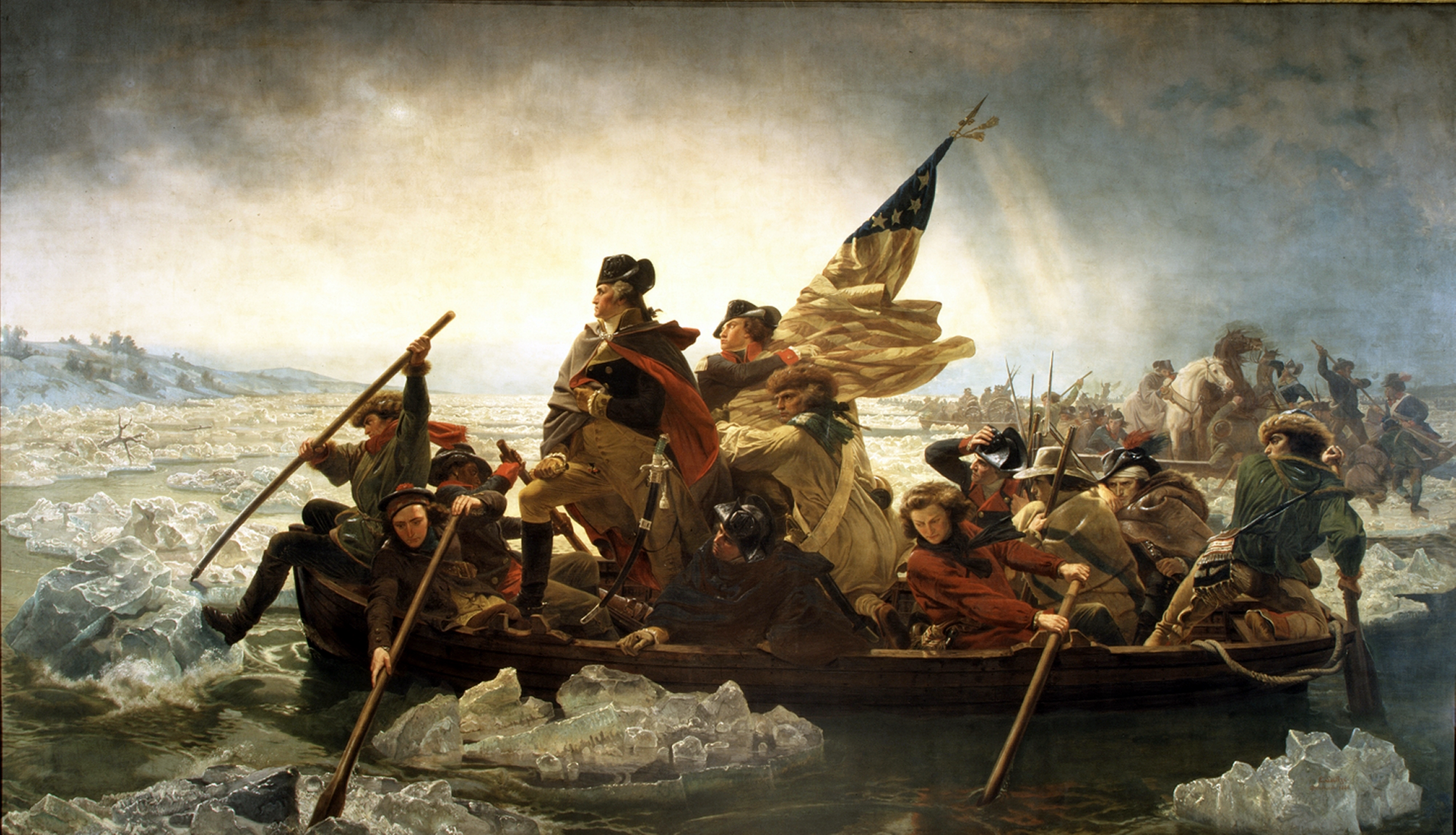
Earlier in his career, Whittredge posed as George Washington while Emanuel Leutze painted 'Washington Crossing The Delaware'. (Worthington is quite comfortable on both sides of the easel The painting below is by William Merritt Chase.)


In its later years, the Stuyvesant was used as the set for a pivotal scene in the Oscar-nominated film noir 'Kiss of Death' starring Richard Widmark. Needless to say, this sort of activity very rarely went on at the Stuyvesant.


View Larger Map
Related Posts Plugin for WordPress, Blogger...